At the Bench: A Conversation with Jules Symons
Jules Symons did not plan to become a bootmaker. She came to it the way a lot of the best things happen — sideways, through curiosity, during a long dog walk when her Sperry started falling apart. She ripped the shoe open, copied the pattern, and rebuilt it. It was not pretty. But the next one was better. And the one after that. Fifteen years later, Jules leads footwear design and development for Archive, working from Vancouver to shape every piece that comes out of the collection. We asked her about the work.
How did you get into shoemaking, and when did you know it was the work you wanted to do?
For me, I kind of fell into it. Completely unintentional, it's not the romantic story that most shoemakers have. I wish it was. But for me, it was after an amazing ski season and some much needed time away from the studio. I think it was my first bout of creative burnout when I look back. I was having a hard time getting back into the studio. I was a bit bored with the products I was making.
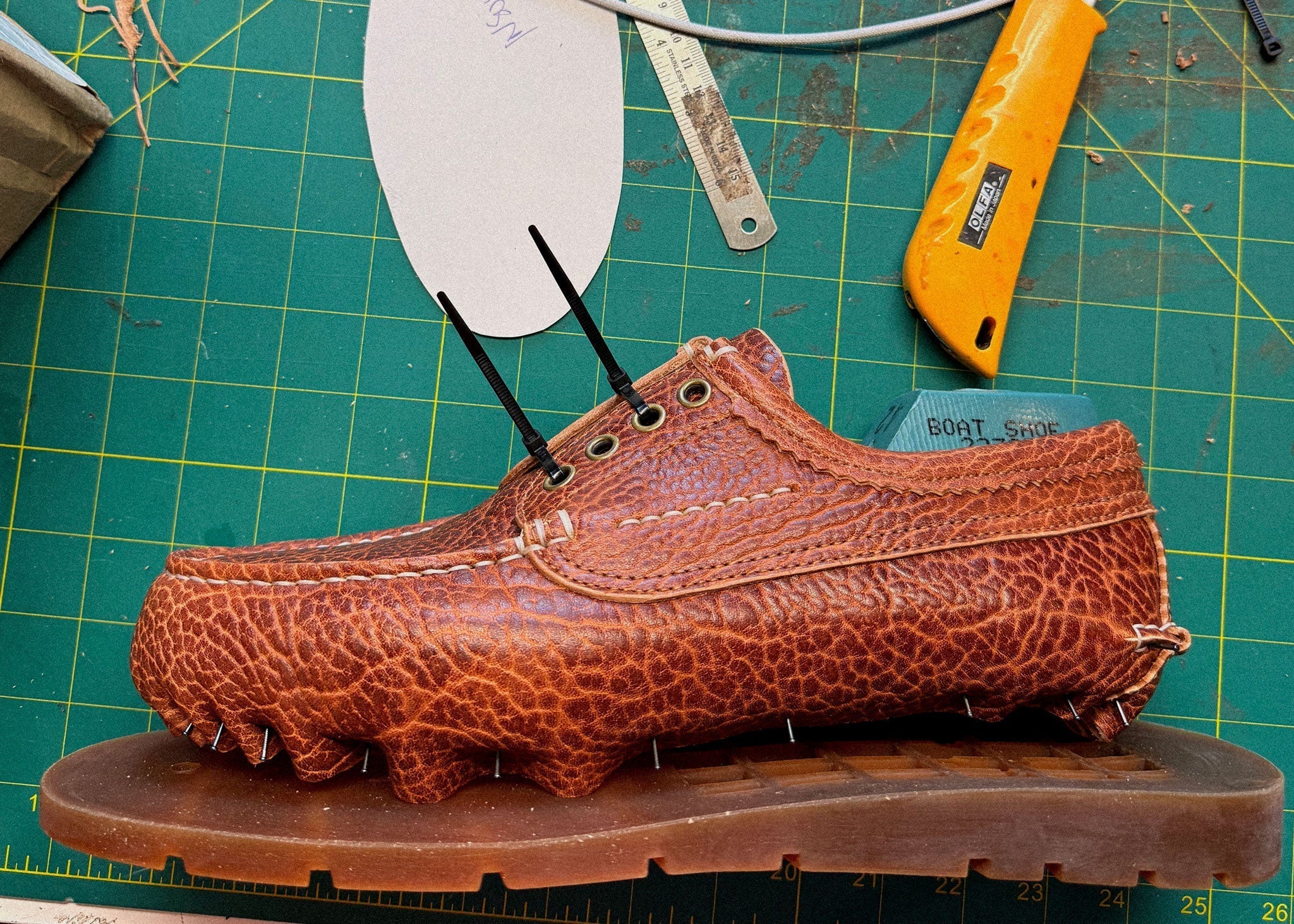
At that time we had streamlined our leather accessories and had started vending at big craft shows and getting some wholesale accounts. Anyways, I was on a dog walk, and my Sperry boat shoe sole was starting to fall off. When I got back home, I was looking at the shoe and then I was looking at the construction, the pattern. I thought to myself, I feel like I could make this. I ripped the shoe apart, copied the pattern and then reconstructed it. I was so proud of myself. It wasn't anything pretty but I knew the next one could be even better. There the obsession started. Every pair from then on was an attempt to be better than the last. But it was also a very steep hill to climb and lots of hard lessons to learn as I went.
Every pair from then on was an attempt to be better than the last.
What does a day at the bench actually look like for you?
Recently, my day is slow. I have been designing and prototyping our next shoe, and so I am in my head a lot. Each step or alteration is me quietly standing and letting my mind think ten steps ahead. Picturing if that change or that alteration would be successful. So I guess I would say that my day is slow and intentional.

What do you look for when selecting leather? What does good material feel like in your hands?
For me, it's the touch. I always want to touch. I'm feeling the drape, the stretch, the colour, the sheen, the consistency in all of those things. I always need to touch. But it's hard because a lot of leathers that I want, from the sought-after tanneries, are picked and shipped to you. So then you rely on reputation. But in those cases, more often than not it's successful and I get all the things I want and need.
Walk us through making a single pair from start to finish. How many steps, roughly how long?
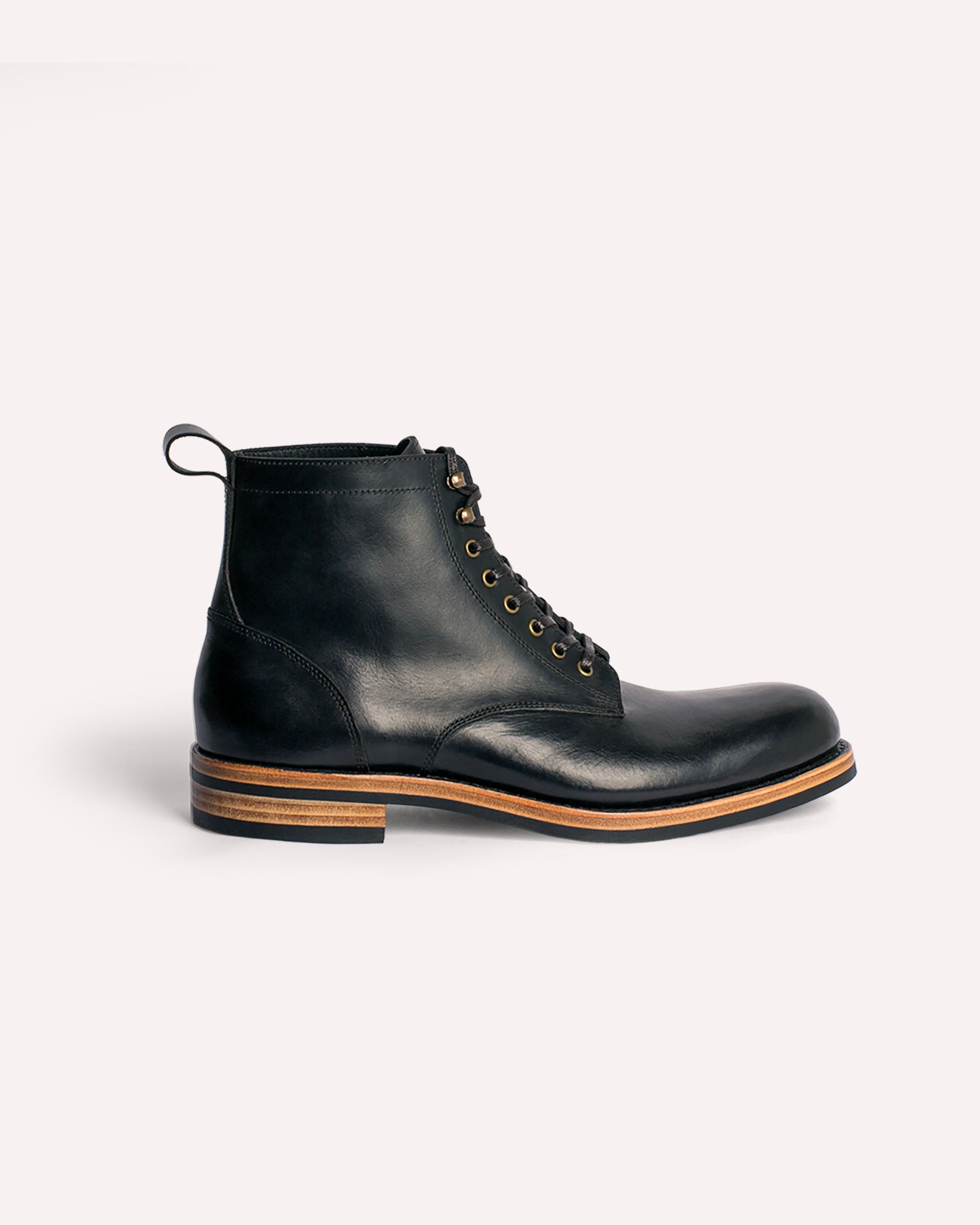
This is always a question asked and a hard one to answer. There is time where a shoe is just sitting — like glue drying or setting to the last — but do you count that because you're not actually touching the shoe? For the Derby Boot, the short answer is roughly about 30-35 hours, or 4 days of solid work. And for a very long answer, let me break it down into the steps that I would take to make a pair of welted boots:
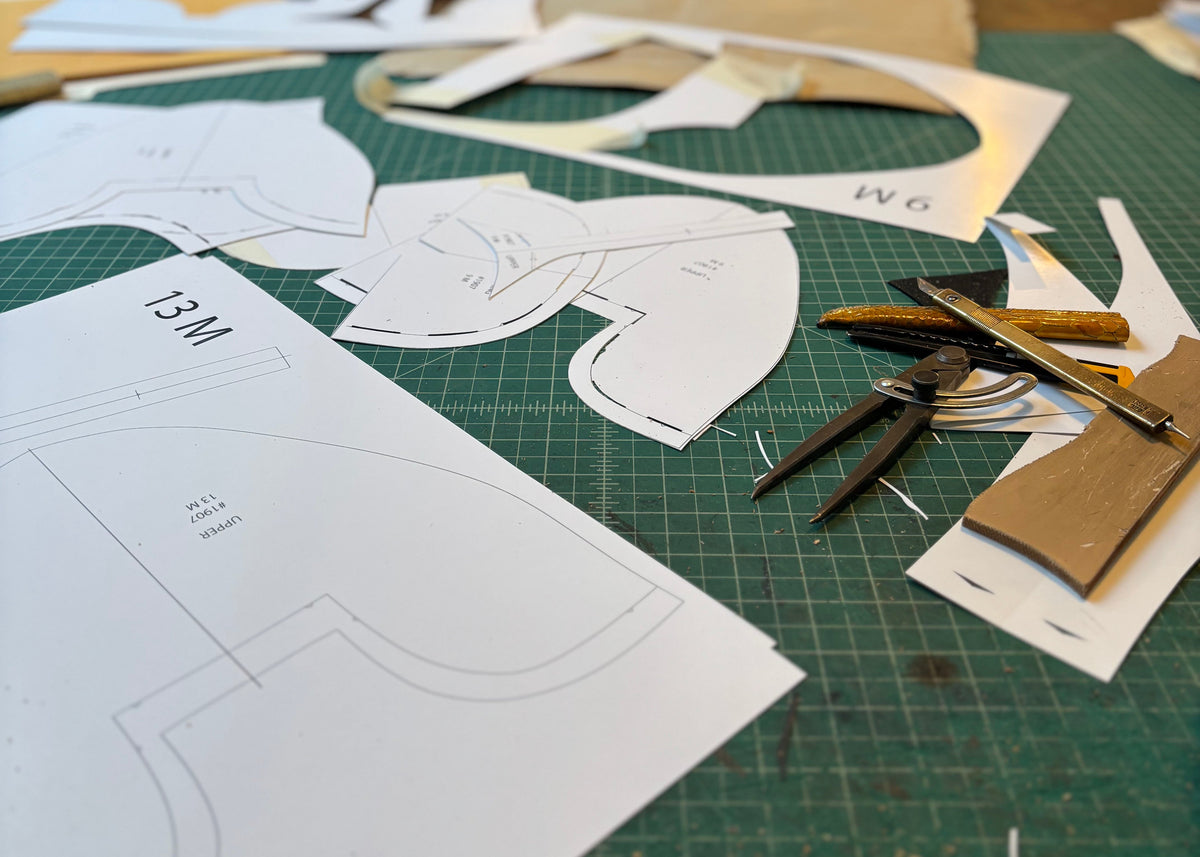
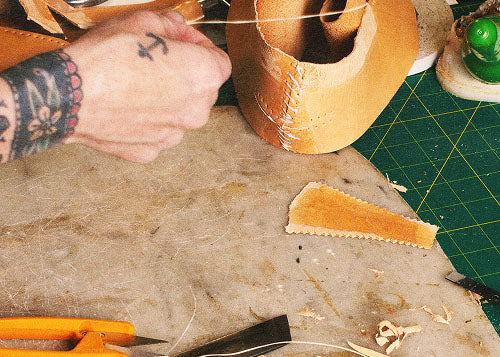
To start, I create the uppers and mold the insoles, setting them aside to dry. Molding the insoles requires the leather to be cased — meaning wet, but not soggy — so that it can be stretched and set to the bottom of the last, which takes about one hour. To create the uppers, I start by selecting the best parts of the leather, placing the pattern pieces, and cutting them out, taking about two hours. Next, I spend two hours skiving and thinning the edges to reduce bulk; this is highly time-intensive, as a great deal of care and attention is needed to remain precise. From there, we transition from 2D to 3D by building the pieces and sewing them to create the finished uppers, which takes three to four hours. Once the insoles are dry, I spend two hours cutting and carving a channel, then pre-punching the holes for welting.
There is time where a shoe is just sitting — like glue drying or setting to the last. Do you count that because you're not actually touching the shoe?
Moving on to lasting, I break the process into three parts. First, the uppers are wetted and a stiffener is added to the counter pocket. The upper is then tacked to the last using a precise sequence of pulls, a process that is repeated for the second shoe of the pair. If everything is aligned and symmetrical, I add the toe puffs and stiffeners, which takes three to four hours before the boots are left to dry overnight. Once dry, I take two hours to sand the toe puffs to create smooth, identical, and well-shaped toes. The uppers are then completely lasted and, once dry, are ready for welting, which takes another two hours.
Hand-welting the boots is an intensive step that takes two to three hours to ensure the stitches are perfectly even and straight along the perimeter of the boot. Next, the cavity created between the welt and the insole is filled with cork and leather to form a flat, smooth surface to attach the sole, taking about an hour. The sole is then glued, attached to the boot, and prepped for outsole stitching, which requires one to two hours. Moving on to heel building, individual leather lifts are stacked, attached, and then leveled for the final rubber lift, taking two hours. Once the heels are nailed to the boot, the soles and heels are shaped on a sanding machine for an hour. I then spend two to three hours hand-sanding with finer grit sandpaper and broken pieces of glass to achieve a remarkably fine finish. Finally, on the home stretch, the boots are thoroughly cleaned, the soles are coated with edge finish and wax, and the leather is conditioned and polished, which takes about three hours.
What's the step in the process most people would never think about?
I don't think it's one step in the making of a pair of shoes, but I think people are surprised at the very many steps it takes. We are all very disconnected from the production of our daily products. I don't think many people think about how something is made — it is something that is there and they need it so therefore they have it. Education of how we make is as important as us making these products.
What does it mean to you that these boots are resoleable? What does repairability mean for the person wearing them?
It's everything, to make a shoe or boot repairable. It's knowing that you are making something that will not need to be disposed of after a season. It's using quality materials that I know will stand the test of time and wear. It's the feeling when a customer says their boot is still in their rotation after five, ten, fifteen years.
The feeling after you have taken a dusty, worn shoe, repaired what you need to, conditioned and polished it, and stand back to see it come back to this even more beautiful thing - full of patina and its own story, but now with a new extended life to carry on. That is the whole point.

For the customer, it's probably about justifying the price against how long the object will be in their life. I have a dear friend who only buys quality goods. He breaks down the price and divides it by how many years it will be with him, then compares it to a lesser product and how long that lasts. The better thing almost always comes out cheaper when you spread it across that timeline.
The feeling after you have taken a dusty, worn shoe, repaired it, conditioned and polished it, and stood back to see it come back - full of patina and its own story, but now with a new extended life. That is the whole point.
How does a pair of Archive boots change over time? What does a well-worn pair look like to you?
An Archive boot will build a story, collecting little marks of your daily life. The leather will develop a beautiful patina. They will form to your feet. They will become your go-tos because they are comfortable and you know they will take you through your day. A well-worn Archive boot is the best compliment a bootmaker can get. Bring on the patina. The more the merrier.
What do you hope someone feels the first time they put a pair on?
They fit! As the bootmaker, I am very nervous leading up to the moment of them trying the boot on. But what I'm hoping the customer feels is: oh damn, I look good in these. Plus they fit.
What does making things in Canada mean to you practically — not as a talking point, but day to day?
Day to day, making things in Canada can be a challenge in terms of sourcing materials. For the most part, the components have to be imported, so there are often extra costs, wait times, and complications. We are also a smaller population spread across a big country compared to our neighbour, with a very small pool of skilled craftspeople, so finding people to work with can be hard.
But that is also what makes it worth doing. The people who are here and doing this work seriously, they are not here by accident. They chose it. That matters.
 Volume 02 is arriving May 28.