


What Is Goodyear Welt Construction, and Why Does It Matter?
What Is Goodyear Welt Construction, and Why Does It Matter?
If you have spent any time researching quality boots, you have probably come across the term Goodyear welt. It gets used often, sometimes correctly, sometimes as a general signal for quality without much explanation of what it actually means. This post is the plain-language version.
Goodyear welt construction is a method of attaching a boot's upper to its sole. It is worth understanding because it is the single biggest factor in whether a pair of boots can be repaired and worn for decades, or whether they end up in landfill after a few seasons.
 The basics: what a welt actually is
A welt is a strip of leather stitched around the perimeter of the boot, connecting the upper to the insole. It creates a channel between the upper and the outsole. That channel is what allows the sole to be replaced without disturbing the upper or the insole of the boot.
Without a welt, the outsole is typically glued or stitched directly to the upper. When the sole wears out, there is no clean way to remove it without damaging the rest of the boot. The boot is effectively finished.
With a welted construction, a cobbler can cut the stitching on the outsole, remove it, and sew a new one onto the same welt. The upper, the lining, and the insole stay intact. The boot gets a new foundation and keeps going.
How Goodyear welt construction works
In a Goodyear welted boot, the welt is stitched to both the upper and a ribbed strip on the insole using a lockstitch that runs horizontally around the perimeter of the insole. After the welt is done, there is a space that is then filled with cork or similar material. This creates a flat surface for the outsole to then be attached. The outsole is then stitched to the welt vertically in a separate pass. The two rows of stitching are independent, which is what makes the resoling process clean.
The space between the insole and the outsole is typically filled with a cork or similar material. Over time, this compresses to the shape of the wearer's foot, which is part of why well-broken-in welted boots feel the way they do. They are, in a genuine sense, shaped to you.
 The Goodyear process was developed in the 1870s by Charles Goodyear Jr. as a way to mechanize what had previously been entirely handwork. It made welted construction more accessible and consistent, and it remains the dominant method for quality footwear production more than 150 years later.
Hand welt construction: the slower version
Hand welting is the original method that Goodyear welt mechanized. Rather than a machine-stitched lockstitch, a hand-welted boot is constructed by a maker who sews the welt by hand using a curved awl and waxed thread.
The result is structurally similar but technically different. Hand welting allows for a slightly more flexible construction because the maker controls the stitch tension throughout. It also produces a thinner, cleaner profile at the welt because there is no machine rib required on the insole.
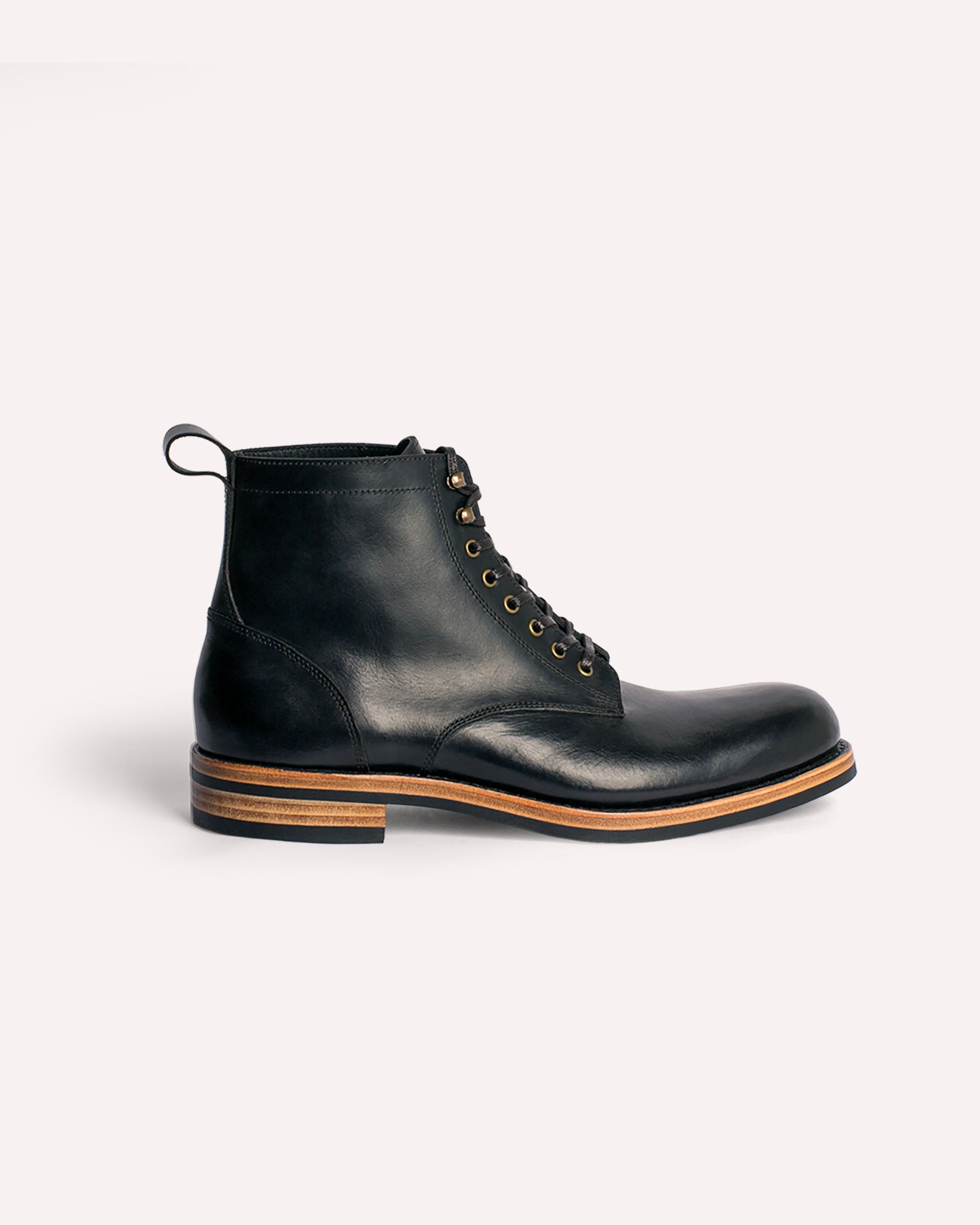
It takes considerably longer. A single pass of hand welting on one boot takes an experienced maker an hour or more. It is the construction method used on Archive's Derby Boot in Volume 01, done by Peter Feeney in his Toronto workshop.
Goodyear welt vs. cemented construction
Cemented construction, sometimes called glued or bonded construction, is the dominant method in volume footwear production. The outsole is adhered to the upper using industrial adhesive. It is fast, cost-effective, and produces a clean, lightweight result.
The tradeoff is repairability. When the sole on a cemented boot separates or wears through, the adhesive bond cannot be properly recreated without specialized equipment. Most cemented boots are not worth resoling, and most cobblers will tell you as much.
For everyday wear in reasonable conditions, cemented boots can perform well for a few years. For someone who wants a pair of boots that improves with age and lasts a decade or more, welted construction is the only practical option.
 What to look for when buying welted boots
Check the welt itself
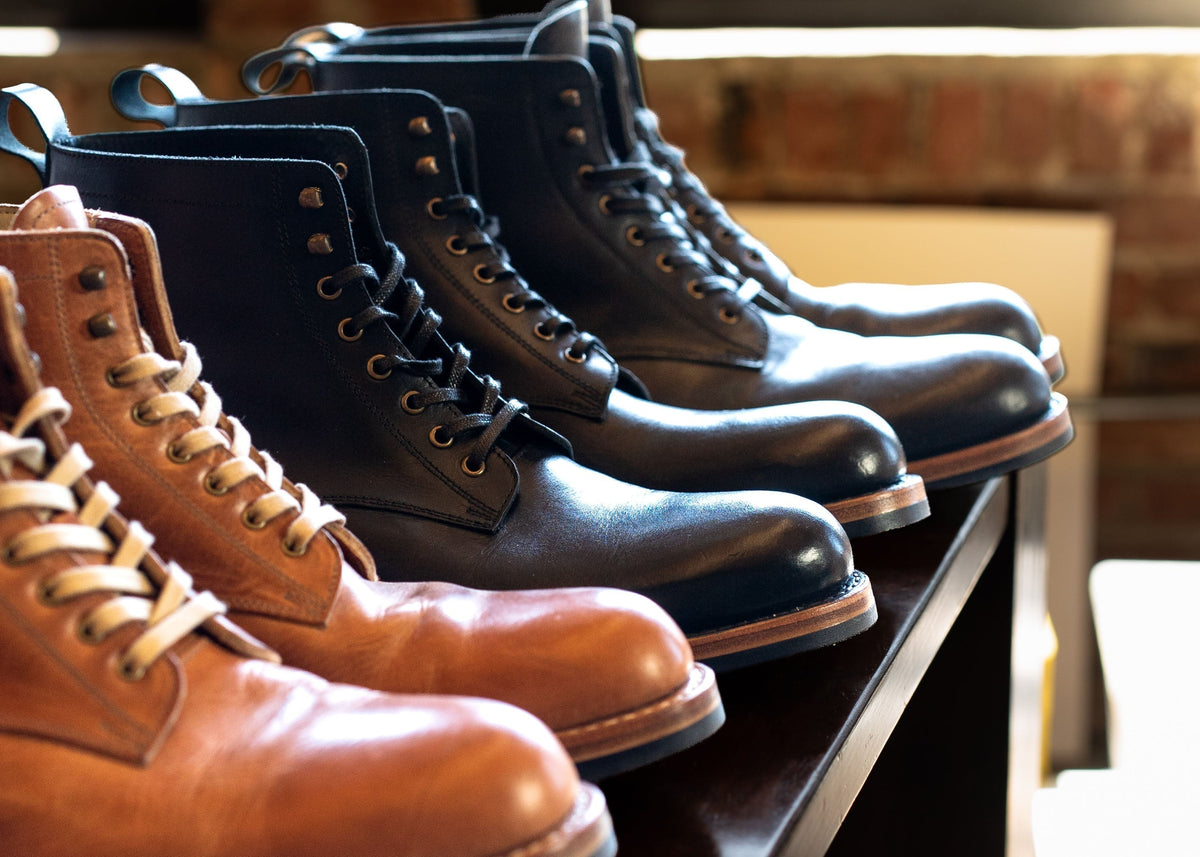
On a genuine Goodyear welted boot, you can see the welt running around the perimeter of the shoe between the upper and the outsole. It should be a continuous strip of leather, stitched on both sides. If you see only one row of stitching or the welt looks like it is part of the outsole rather than a separate piece, the construction may not be what it claims.
Look at the insole
A Goodyear welted boot will have a relatively thick insole with a welt rib running around its perimeter. If you can remove the insole, you should see the channel where the welt stitching passes through. Hand-welted boots will have a channel cut directly into the insole leather rather than a separate rib.
Ask whether it can be resoled
A direct question to the brand or retailer will tell you a lot. A welted boot can be resoled by any competent cobbler. If the answer is vague or the brand does not know, that is useful information.
Consider the outsole material
Welted construction allows for a wide range of outsole options because the sole is stitched rather than glued. Leather, Vibram rubber, and various other compounds can all be attached to a welt. Vibram outsoles are a common choice for durability and traction. Archive's Derby Boot is offered with a choice of two Vibram profiles — the 430 mini-lug for varied terrain and the Eton studded sole for a cleaner, more formal profile.
Why resolability matters more than it sounds
A pair of quality welted boots costs more upfront than cemented alternatives. The case for the investment is simple: a boot you can resole twice or three times across its life costs less per year than replacing cheaper boots every two to three years.
Jules Symons, who leads footwear design and development for Archive, has a friend who applies this logic to every purchase. He divides the cost of an object by the number of years he expects to own it, then compares that figure to a cheaper alternative. The quality item almost always comes out ahead across a reasonable timeline.
 Welted construction is what makes that math work for boots. It is the reason Archive builds the Derby Boot the way it does, and it is what the term heirloom actually means in practice - not just that something is well made, but that it can be maintained and kept going long past the point when most footwear would have been replaced.
The short version
Goodyear welt and hand welt construction attach the sole to the upper via a separate strip of leather called a welt. That strip is what allows the sole to be replaced without touching the rest of the boot. Cemented boots cannot be resoled in the same way. If you want boots that last decades rather than seasons, welt construction is what makes it possible.
The Derby Boot in Volume 01 is hand-welted in Toronto. Production of Volume 01 is now wrapping up, marking the end of its first run and another step in Archive's commitment to making things properly, in limited quantities, and built to be kept.
Interested in made-to-order boots? Reserve your spot.
